
You don’t need an orchard to enjoy growing fruit trees in South Africa. A lemon tree beside the patio, or a fig in a generous pot, can turn an ordinary corner of the garden into somewhere you look forward to visiting.
The pleasure is in being able to use what you grow: picking something for supper, sharing a basket with a neighbour, or watching the first fruit develop. Choosing well at the start helps keep that pleasure from becoming a chore.
This instalment of our Landscaping Mastery Series explores fruit and nut trees for South African gardens, with particular attention to Cape Town and the Western Cape. Let’s start with what could work in your space.
Which fruit and nut trees suit your garden?
Think about what you’d enjoy harvesting and where it could grow. Perhaps there’s room for a tree in a sunny bed, or you’d like to bring something productive into a courtyard you already use every day.
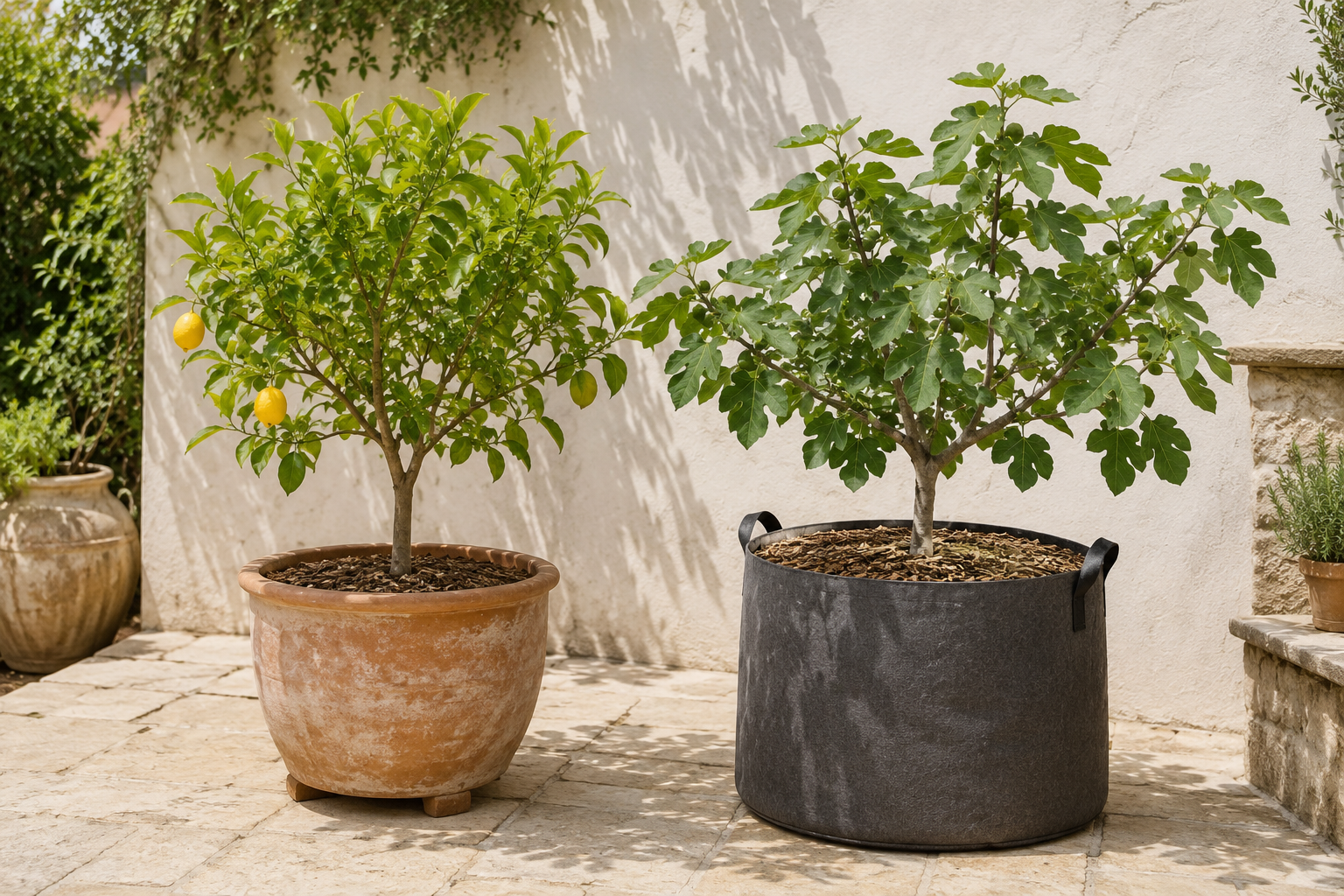
Some fruit trees grow and crop well in large containers. This can be a good option for paved patios, small gardens without spare planting beds, or sites where the ground soil is unsuitable. Selected citrus, figs and dwarf fruit trees can give you a useful harvest without needing an orchard-sized plot. Choosing the right variety and rootstock matters, as this container-fruit guide explains.
A container does bring extra watering and feeding responsibilities, which we’ll cover below. For now, use the table to see which trees might fit your garden.
| Tree | Where it could fit | Can it grow in a container? | What to plan for |
|---|---|---|---|
| Lemon, naartjie or kumquat | A sunny, sheltered spot with suitable winter temperatures | Yes, with suitable compact varieties and rootstocks | Watering, drainage and frost protection |
| Fig | A warm, sunny garden or patio | Yes, with suitable root restriction | Managing growth, birds and fallen fruit |
| Pomegranate | A warm, sunny, well-drained site | Possible with a suitable fruiting cultivar | Some dwarf types are ornamental; cropping still needs water |
| Olive | A suitable Mediterranean-type climate | Possible, although the crop may be modest | Cultivar, pollination and processing before eating |
| Apple or pear | A site meeting the variety’s winter chill needs | Possible on suitable dwarfing rootstocks | Pollination partners and training |
| Peach, plum or apricot | A suitable temperate site | Possible with selected compact trees | Blossom frost, pests and appropriate pruning |
| Almond | A suitable site with dry summers | Not a first choice | Flowering conditions and pollination |
| Pecan | A large garden with warmth and water | Poor choice for a permanent container harvest | Mature size and effective pollination |
| Macadamia | A suitable warm, largely frost-free garden | Poor choice for a permanent container harvest | Climate and room to mature |
Choosing fruit trees for Cape Town and the Western Cape
Once a few trees appeal to you, look more closely at their position. A sheltered courtyard and an exposed coastal garden can behave very differently. Sunshine, wind, winter cold and drainage all affect your choice.
Citrus, figs, pomegranates and olives deserve consideration in suitable Cape Town and Western Cape gardens. Apples, pears and stone fruit need closer attention to winter chilling: a variety that crops well in a colder inland district may disappoint near the coast. For olives, SA Olive’s local guidance is a useful starting point.
Across South Africa, frost, rainfall, humidity and heat change the picture. Macadamias need suitable warmth and protection from damaging frost; for example, SAMAC outlines these requirements. A pecan can become a substantial tree, so picture its future canopy before choosing it for a suburban garden. The Agricultural Research Council describes this as a long-term commitment.
At the nursery, ask for the named variety, or cultivar, and the rootstock, the root system onto which many fruit trees are grafted. Ask whether it needs another compatible tree for pollination, too. These details help you choose for your garden rather than for how attractive the sapling looks today. Our soil and plant guide will help you assess the planting site.
Growing fruit trees in pots and containers
If a patio tree sounds appealing, think of the container as its long-term growing space. Keeping a young tree alive in a nursery pot is quite different from helping it crop there for years.
Large pots and grow bags can both work, provided they suit the tree, drain effectively and remain stable. Use a suitable container growing medium and consider the bag or pot’s durability. Once filled and supporting a mature tree, it may be too heavy to move easily.
The main tradeoff is care. Roots in a container have limited access to water and nutrients, so you’ll need to check moisture regularly, particularly in hot or windy weather, and plan for feeding and eventual repotting or root management. The RHS container guide covers these ongoing needs.
What about burying a blue 200-litre drum?
It’s an understandable idea: give the roots a generous space while keeping them contained. But a buried drum can restrict drainage, encourage circling roots or allow roots to escape through openings. It also becomes difficult to inspect or replace. Never use a container that held chemicals or has an unknown history for growing food.
Purpose-designed root restriction can work for particular trees, especially figs. That doesn’t make a drum a reliable barrier protecting paving, drains or foundations. Even “non-invasive roots” claims need context: species, rootstock, soil, water and placement all matter.
For most small gardens, an accessible above-ground container or a properly planned bed is a better starting point. If you’re unsure how to fit either into an established garden, discuss the planting space with Contours Landscapes.
Shape a tree you can enjoy harvesting.
Whether you plant in a pot or the ground, imagine picking from the mature tree. Can you reach the crop, inspect the leaves and collect fallen fruit without squeezing through a narrow gap?
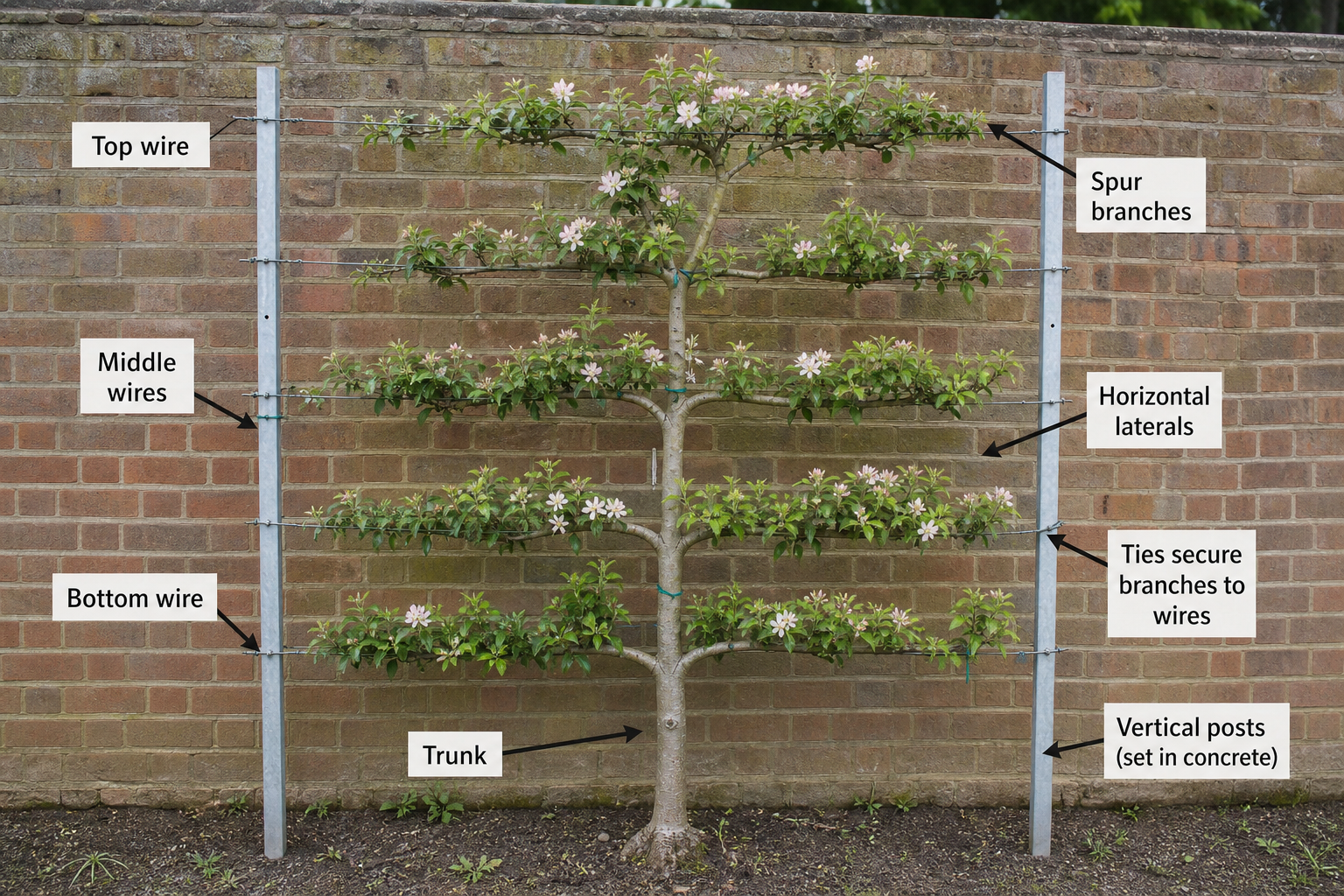
Planning its shape early makes those jobs easier. Apples and pears can suit espalier training, with branches arranged along supports; some stone fruit suit fan training. Both can make productive use of a narrow space with the right varieties and care.
You can create a neat garden without clipping every tree into an identical ball. Species carry fruit on different wood, so hedge-like trimming can remove productive growth. Matching containers or supports can provide visual consistency while allowing each tree an appropriate shape.
For estates and commercial properties, our commercial garden maintenance services include planned pruning and seasonal care.
An accessible tree is also easier to manage for a worthwhile crop. Suitable light, moisture and pollination come first. Where appropriate, thinning some developing fruit can improve the size of what remains and reduce overloading. A smaller harvest of fruit you can reach and use may be more satisfying than branches packed with undersized fruit.
Keep pests from spoiling your fruit harvest.
Once fruit starts developing, it’s tempting to worry about everything that might eat it. Regular observation is more useful than assuming every marked leaf needs treatment.
Fruit flies are a concern in Western Cape fruit-growing areas, including Mediterranean fruit fly; Hortgro provides local context. Other pests depend on the crop and district. Before buying, ask nearby growers what troubles the same trees locally. There is no universally pest-proof choice.
Look for changes: soft patches or larvae inside fruit, tunnels towards an apple’s core, winding trails on young citrus leaves, or sticky leaves with a sooty coating. These can indicate fruit-feeding pests, codling moth, leaf miner, or sap-feeding insects such as scale. Citrus-pest guidance can help you recognise symptoms, but confirm the cause before choosing a response.
Start with accessible trees, inspection, prompt harvesting, removal of affected fruit and suitable barriers. Natural or organic pest-control products can still harm beneficial insects. Ask a qualified adviser whether treatment is needed; there is no universal rule to repeat it after every rainfall.
Companion planting can make this care more enjoyable by bringing flowers and beneficial insects into the garden. Sweet alyssum and flowering dill can support beneficial insects. Think of them as useful habitat, not a fix-all for every pest, and avoid crowding young trees or creating heavy competition for water.
Leave something for the birds, or keep more for yourself?
For some gardeners, watching birds visit a fruiting fig is part of the reward. Others would prefer to enjoy the figs themselves. Decide how much you’re happy to share before the crop ripens.
An indigenous option for a productive boundary is num-num, or Natal plum (Carissa macrocarpa), a thorny shrub whose ripe fruit attracts birds. Only correctly identified ripe fruit should be eaten, not other plant parts. Giving birds their own planting doesn’t guarantee they’ll leave your favourite tree alone, though.
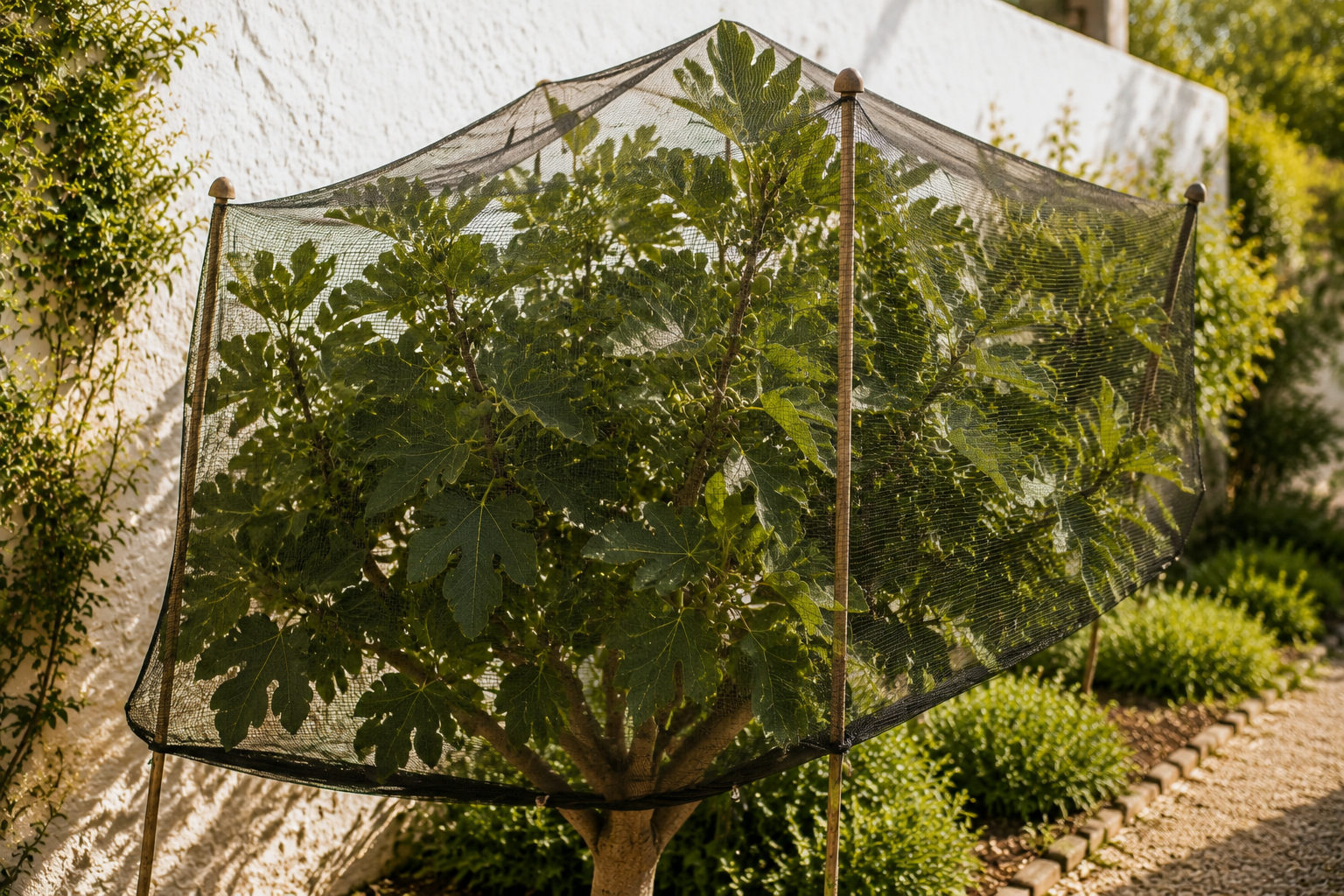
If protecting the crop matters, a manageable tree makes the job much easier. Netting is most practical on small, accessible trees. Use wildlife-safe, fine-mesh fabric, secured to a frame without loose folds, and check it daily. WIRES recommends openings smaller than 5 mm; this is wildlife guidance, not a South African legal specification.
Netting is usually seasonal: allow required pollination, protect developing fruit before damage begins and remove it after harvest. Leave access for picking. For a modest crop, individual bags may be less work; Grow Folk lists fruit-protection bags locally. Check the mesh and intended pest, because bird protection is not automatically insect protection.
You could protect selected branches and share the rest. Harvest promptly, and don’t rely on a decorative owl or reflective ribbon to safeguard the entire crop.
Feed the soil, and keep expectations realistic.
With the harvest protected, it’s natural to want the best possible fruit from your effort. Start with healthy growing conditions rather than a cupboard full of supplements.
Mature compost, mulch and an appropriate organic fertiliser serve different purposes. Compost adds organic matter; mulch protects the soil surface; fertiliser can address nutrient needs. Keep mulch clear of the trunk. Improving soil with organic matter can benefit structure and water management, but compost alone doesn’t guarantee balanced nutrition.
Organic feeding doesn’t automatically make fruit more nutritious, either. Manufactured fertilisers vary and may include micronutrients. Plants absorb nutrients in particular forms regardless of their source, as Oregon State explains.
For trace elements, let soil testing and symptom assessment guide you. Correct actual deficiencies, including any pH-related availability problems, instead of adding everything just in case. Excess nutrients can cause problems too.
Enjoy the surplus before it becomes a mess.
A generous crop is a lovely problem when you’ve planned for it. A neighbour might swap vegetables for your fruit, friends may welcome a basket, or a community kitchen may accept a donation. Ask first and share sound fruit and nuts while they’re usable.
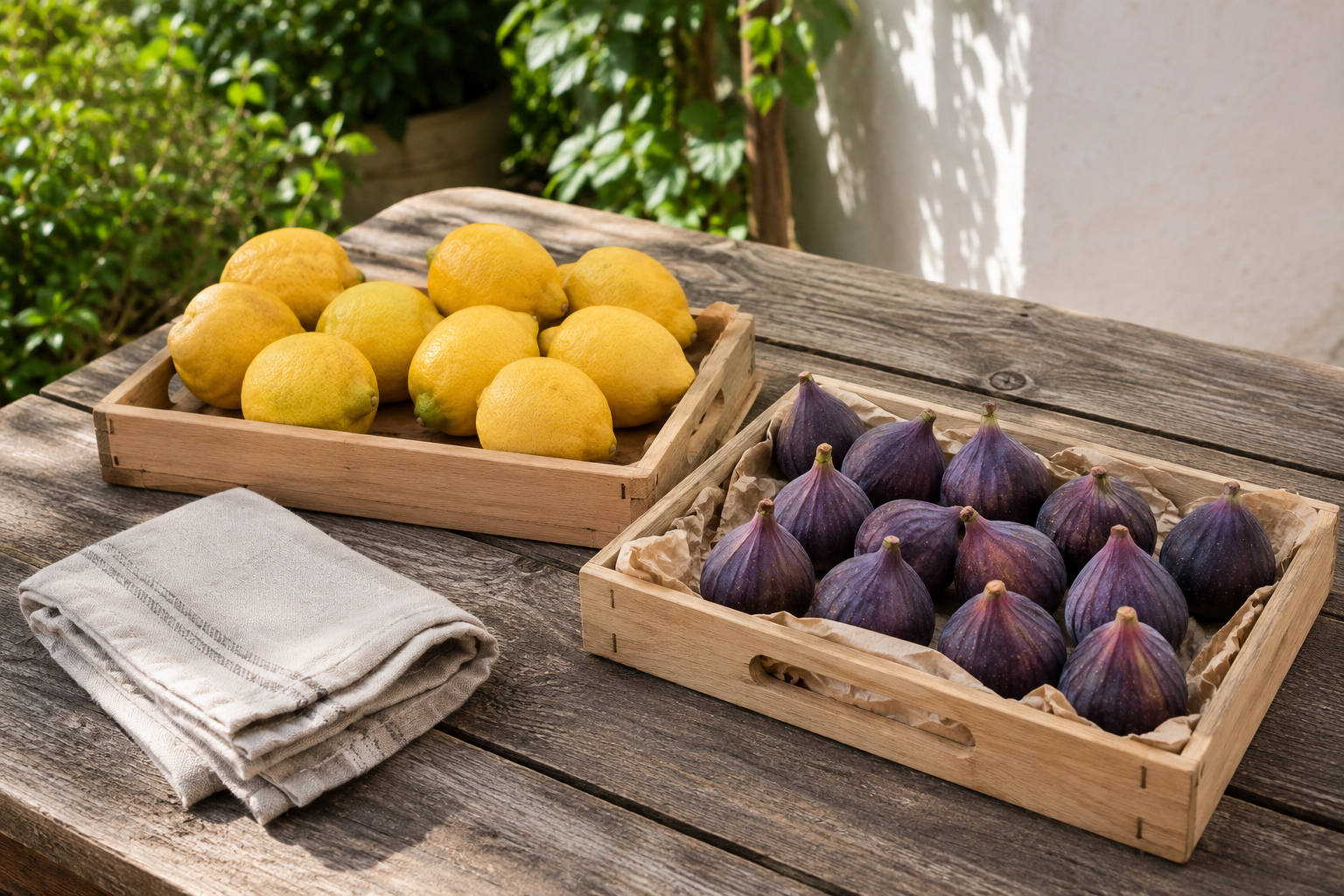
Collect windfalls regularly. Healthy, suitable material can enter a well-managed compost system, but mouldy produce shouldn’t be donated and infested fruit needs appropriate handling. An ordinary cool compost heap may not resolve a pest problem. Fruit Fly Africa explains why removing infested fruit matters.
You don’t have to grow everything to make an edible garden worthwhile. Start with something you enjoy eating, give it a suitable place, and plan for the care it will need.
If you’d like fruit or nut trees to become part of your Cape Town garden, contact Contours Landscapes to discuss the planting plan. Share your suburb, available space, site photos and what you’d love to harvest.
For the wider picture, explore the other guides in our Landscaping Mastery Series.
Frequently Asked Questions:
When is the best time to plant fruit trees in Cape Town?
Winter is generally the best time to plant bare-root deciduous fruit trees, such as apples and pears, while they are dormant and before new growth begins. Trees supplied in pots offer more flexibility, but choose mild weather and avoid planting into waterlogged soil or during intense summer heat. Keep checking moisture as they settle in—being planted during the rainy season doesn’t guarantee their roots have enough water. Tree-planting guidance
When should I prune fruit trees in South Africa?
The right season depends on the tree. Freestanding apples and pears are generally pruned during winter dormancy, after leaf fall and before new growth. Trained forms, such as espaliers, also need summer attention. Established plums and apricots are generally better pruned during spring or summer growth, rather than wet winter conditions, to reduce disease risks. Check the advice for your particular tree before giving the whole garden its annual trim. Apple and pear pruning, plum pruning, apricot pruning
How long do nut trees take to produce?
Expect several years before your first harvest. Grafted macadamias can begin producing in about three to five years, while seed-grown macadamias commonly take 10–12 years or longer. Pecans may begin producing around year five under good growing conditions, although some varieties take longer. These are starting points, not promises of full baskets: substantial crops come later, and climate, pollination, tree quality and care all influence the wait. SAMAC’s growing guidance, University of Georgia pecan production estimates
Should I grow fruit trees from seed or buy a grafted tree?
For a predictable harvest, a named grafted tree is usually the better choice. Growing from seed can be an enjoyable experiment, but the fruit may differ from the parent and the tree may take longer to bear. The right rootstock also helps you choose a tree suited to your available space—grafted doesn’t automatically mean dwarf. Rootstock guidance
Our seeds versus established plants guide explores which approach suits your garden and patience.