
Part of the Contours Landscapes Landscaping Mastery Series.
At some point in almost every landscaping conversation, someone says the same thing: “Can’t we just use seeds? It would be so much cheaper.” It’s a fair question. Seeds are cheap, they’re available at every nursery and garden centre, and growing something from scratch carries a certain appeal. But the choice between seeds and established plants is more nuanced than it looks – and getting it wrong can cost you more time, money, and frustration than simply buying the right plant in the first place.
If you haven’t read the previous instalment on soil and plant considerations, it’s worth doing before this one – soil preparation directly affects whether seeds or established plants are the right call for your site.
This guide covers when seeds genuinely make sense versus when established plants are the better call, how to choose, test and store seeds properly, what the law says about importing exotic seed, and why your Kikuyu lawn might not thank you for a winter ryegrass overseed.
Are seeds cheaper than established plants? Not usually – not once you account for the full picture. Seeds cost less to buy. Growing from seed typically costs more overall.
The Real Cost of Growing from Seed
A packet of Kikuyu grass seed costs R50 to R80. A roll of instant lawn costs significantly more per square metre. On paper, the maths seems simple. But a lawn grown from seed requires twice-daily watering for six to ten weeks during germination and establishment, careful soil preparation before a single seed goes in, a second sowing to fill the patches where germination failed, and constant attention to the weeds that colonise bare soil faster than grass can cover it. By the time a seed-grown lawn is functional, the combined cost of water, labour, additional seed, and weed management frequently matches or exceeds what instant lawn would have cost – and you’ve waited three months for the privilege.
For a commercial landscaping project, seeds are essentially never viable. When Contours Landscapes delivered the SALI Shield Award-winning Baronetcy Penny Park Lane project in Plattekloof, the landscape included mature Water Pear trees providing immediate shade over a children’s play area. No developer, estate manager, or residents’ committee can be shown a field of seedlings and told to come back in two years. Established plants deliver the result from day one.

When Seeds vs Established Plants: The Right Choice for Each Situation
Seeds make sense for:
Vegetables and annual flowers are the clearest case. Many of them – carrots, radishes, beetroot, poppies, nasturtiums – actually have to be direct-sown because their roots don’t survive transplanting. A carrot started in a tray and moved to the garden will fork and stunt. Sown directly into prepared soil, it grows straight. For the food garden and annual flower bed, seed is not the budget option – it’s simply the correct method.
Large-scale site restoration is another genuine use case. Planting established plants across a hectare of eroded slope or a fynbos rehabilitation site is prohibitively expensive. A carefully chosen seed mix, broadcast over properly prepared ground, is how large-scale ecological restoration gets done. The timeline is longer, but the economics make it the only realistic approach at that scale.
Kikuyu lawns on a tight budget with a flexible timeline can also be established from seed, provided the gardener understands the commitment involved and accepts that instant results aren’t coming.
Established plants make sense for:
Most other situations – trees, feature shrubs, groundcovers, lawn varieties other than Kikuyu, any project with a client or a deadline, and anywhere that immediate visual impact matters. Established plants establish faster, fail less often, close canopy sooner (which suppresses weeds naturally), and carry far less risk of the whole exercise going wrong because of a week of dry weather or a flock of starlings.
What About Lawn Grass Specifically?
Kikuyu is the one SA lawn variety that seeds reliably and well. It germinates in warm conditions, spreads aggressively, and for large open areas where time is genuinely flexible, seed is a workable option.
LM Berea and Buffalo grass are a different story. These varieties are almost exclusively available as turf rolls or plugs. Products sold as “Buffalo grass seed” in garden centres are typically generic seed blends – they will not produce a true LM Berea or Buffalo lawn. If you want either of these varieties, buy rolls or plugs. There is no shortcut.
For a full breakdown of which grass suits your site’s sun, soil, and water conditions, our grass types guide covers all the major South African options.

Should You Overseed Your Lawn in Winter?
Overseeding – broadcasting new seed over an existing lawn – is commonly recommended as a way to maintain green colour during Kikuyu’s partial winter dormancy in Cape Town. The idea is that fast-germinating cool-season grass covers the browning Kikuyu until spring. It works, but it comes with a trade-off that isn’t always mentioned.
The honest picture on winter overseeding: Annual ryegrass or tall fescue sown over Kikuyu in March or April will germinate quickly and keep the lawn looking green through winter. Annual ryegrass dies off naturally in summer heat, which is the point. Tall fescue is more persistent and in some lawns becomes a long-term fixture. The problem is what happens in spring: the overseeded grass competes directly with Kikuyu as it tries to come out of dormancy, and a well-established ryegrass or fescue cover can genuinely set the Kikuyu back. Some homeowners end up with a mixed lawn that’s harder to manage than either grass on its own.
If you overseed, use annual ryegrass rather than perennial ryegrass or tall fescue, and accept that you’ll need to manage the transition in September and October by cutting back irrigation slightly to let summer heat suppress the cool-season grass and give Kikuyu room to take over again. If your lawn is in good condition and you’re not bothered by a few months of lighter colour, skipping the winter overseed entirely is a perfectly reasonable call.
For overseeding to fix bare or thin patches in summer, the timing is different – September to November in Cape Town, when soil temperature is consistently above 15°C and Kikuyu is actively growing. Scarify first to remove the thatch layer, aerate the soil, broadcast seed at the recommended rate (not more – overseeding creates competition that slows establishment), and water twice daily until you see coverage.
Choosing Seeds: What to Look For
When seed is the right choice, quality matters more than price. Buy from established South African suppliers – Seeds for Africa, Kirchhoffs, and Starke Ayres are the most reliable. Certified SA seed will show a germination rate on the packet: 70% or higher is the benchmark for seed worth sowing. Below that, you need to sow considerably more densely and accept a higher risk of thin results.
Check the packing date. Seed stored on a warm shop shelf from last season may have lost significant viability before you’ve even opened the packet. Fresh seed from the current season is worth paying a little more for.
Match the seed to your climate zone. South Africa spans several distinct growing regions, and seed bred for highveld summer rainfall will not behave the same way in the Western Cape’s winter rainfall climate.
How Long Do Seeds Last, and How to Store Them
Seeds are alive, held in a state of dormancy. How long they stay viable depends on species and storage conditions.
General guidelines: grass seed stays viable for one to two years; most annual flower seed lasts one to three years; vegetable seed ranges from two to five years with good storage; proteas and most fynbos species have short viability of one to two years and sometimes less; onion family seed (leeks, spring onion, chives) drops off sharply after a year and is best sown fresh.
Cool, dark, and dry is the rule. Moisture and heat kill stored seeds faster than anything else. Airtight glass jars in a cool cupboard work well. A household fridge is better still – make sure the container is properly sealed so condensation doesn’t form when you take it out. Never store seeds loose in a paper bag in a garden shed.
Testing whether old seeds are still viable is simple. The float test works for larger seeds: place them in a glass of water for fifteen minutes – seeds that sink are likely viable, seeds that float are probably dead. The paper towel test is more reliable for smaller seeds: lay ten seeds on a damp paper towel, fold it over, seal it in a plastic bag, and leave it somewhere warm for seven to fourteen days. Count what germinates. A rate of 70% or higher means your seeds are worth sowing. Below 50%, buy fresh stock.
Harvesting Seeds from Your Own Garden
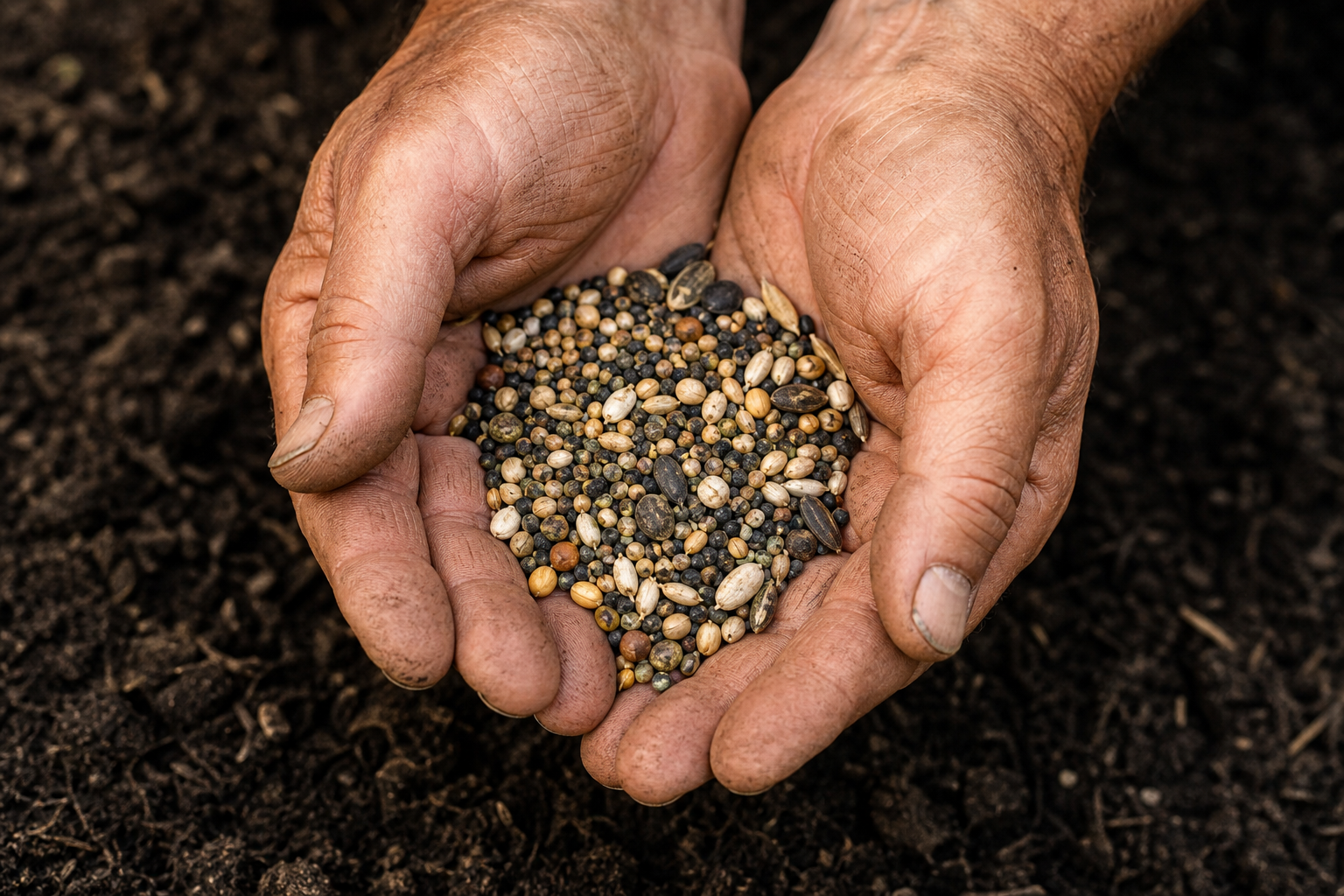
Saving seed from your own garden is worth doing, both for the saving and because plants grown from locally collected seed gradually adapt to your specific microclimate.
Wait until the seed head is fully ripe – usually when it has turned brown, and the seeds feel firm and dry to the touch- but before the plant disperses them naturally. Snip the seed head into a paper bag (not plastic – moisture needs to escape) and allow it to dry further in a shaded, airy spot for one to two weeks. Once dry, shake the bag to separate seeds from chaff, then store in labelled paper envelopes inside an airtight container. Always write the plant name and harvest date.
Seeds saved from hybrid or F1 varieties won’t grow true to the parent plant. Stick to open-pollinated or heritage varieties if you plan to save seed year after year.
The Exotic Seed Trap: Why You Can’t Just Order Seeds from Overseas
Every gardening season, South Africans browse overseas seed catalogues and find plants they can’t source locally – unusual cultivars, exotic species, things that look extraordinary in a European or American garden. Before ordering, several things need to be understood.
Importing seeds into South Africa requires an import permit from the Department of Agriculture, Land Reform and Rural Development (DALRRD). Seeds can carry quarantine pests and diseases that, once established in South Africa, can cause serious agricultural and environmental damage. Bringing seed in personal luggage without declaring it is illegal – and if the seed is harbouring a pest or pathogen, the consequences extend well beyond the garden.
More importantly, if a plant is not commercially available from South African nurseries, there is usually a reason. It may appear on the invasive alien species list under the National Environmental Management: Biodiversity Act (NEMBA). Category 1a plants – the most serious classification – cannot be owned, grown, imported, sold, moved, or propagated, and all trade in their seed is prohibited. Category 1b and Category 2 plants carry their own restrictions. Planting something on one of these lists, even unknowingly, carries legal liability.
Before sourcing any plant you can’t find locally, ask a reputable South African nursery why it isn’t available. Their answer is usually all the information you need. For an extensive range of indigenous SA species available legally and correctly, Seeds for Africa carries one of the most comprehensive selections in the country.
The Fynbos Exception: Smoke Water and What Most Gardeners Don’t Know
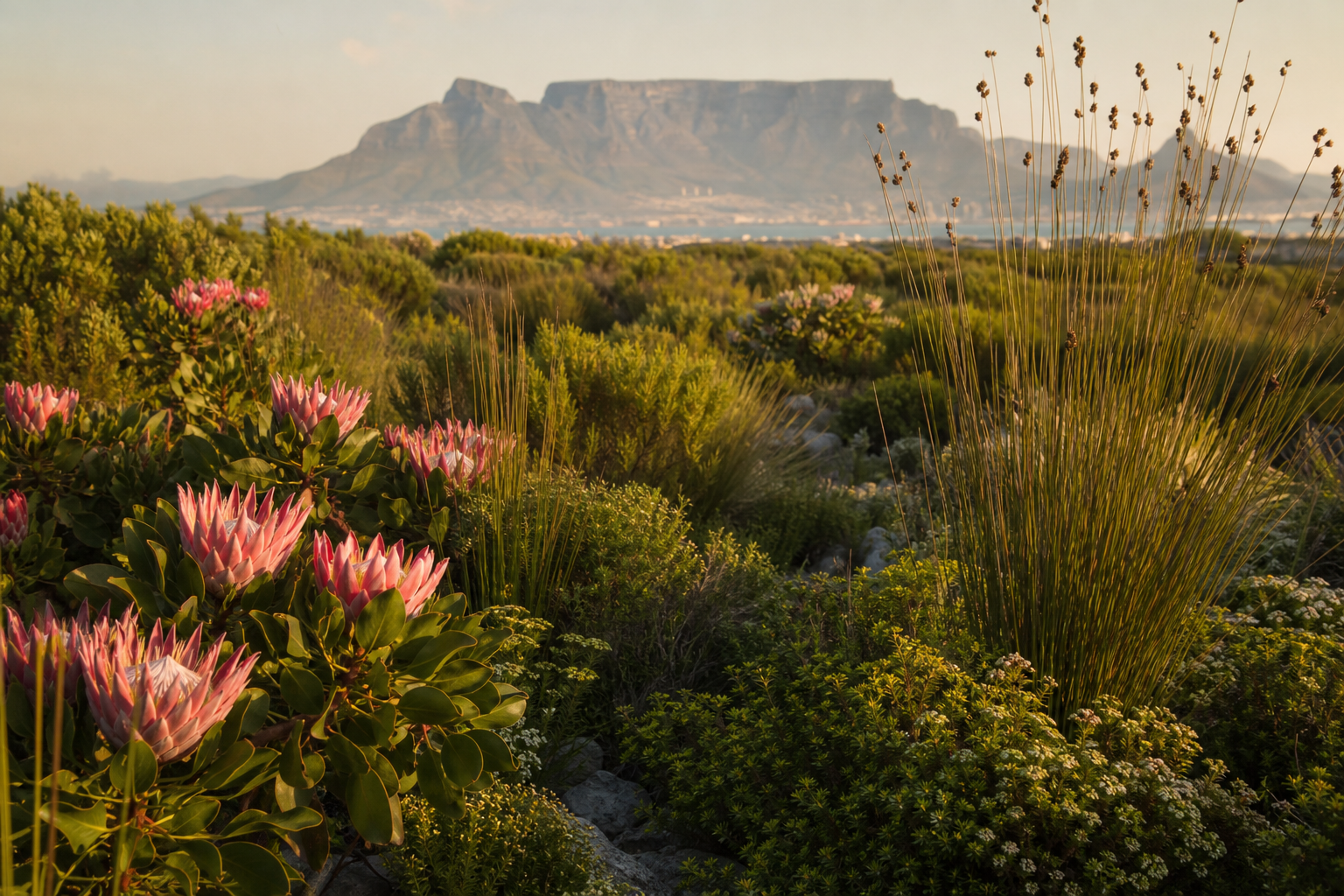
Many Cape fynbos species evolved to germinate specifically in response to fire. Their seeds carry chemical inhibitors that are broken down by smoke, triggering germination after a veld fire clears the landscape. If you sow proteas, ericas, restios, or other fynbos species in ordinary potting soil and water them normally, you may see very poor results – not because the seeds are old or damaged, but because the chemical trigger they’re waiting for hasn’t come.
Smoke water, available from Kirstenbosch and specialist fynbos nurseries, solves this. Soaking fynbos seed in diluted smoke water for 24 hours before sowing, or watering seed trays with smoke water after sowing, dramatically improves germination. For anyone trying to establish fynbos from seed, this is not an optional extra – it’s the step that makes the difference between a frustrating result and a successful one. Our fynbos garden design guide covers species selection in more detail.
Giving Seeds the Best Chance: Germination Boosters
Explogrow is a South African biostimulant made from leonardite and humic acids, widely available at local nurseries. Applied at sowing, it improves soil biology. It has shown meaningful improvements in germination rates and early seedling vigour, particularly in the nutrient-poor sandy soils common along the West Coast.
Pre-soaking larger seeds – beans, peas, tree seeds – in warm water for twelve to twenty-four hours before sowing softens the seed coat and speeds germination noticeably. For anyone starting seeds early in spring when Cape Town soil is still cold, a seedling heat mat maintaining soil temperature at 20 to 25°C makes a real difference to germination speed and consistency.
Protecting Seeds After Sowing
A newly seeded bed is a banquet for birds, ants, and weeds. Bird netting or shade cloth laid directly over the seeded area immediately after sowing is the simplest and most effective protection for large-seeded species like grass, beans, and sunflowers. For smaller garden beds, reflective tape or foil strips strung a few centimetres above the soil disrupt birds long enough for germination to take hold.
Ants harvest seeds underground with surprising efficiency. A light ring of diatomaceous earth around the seeded area acts as a physical deterrent without chemicals.
The most important thing during germination is consistent moisture. A seed that dries out once during the germination process often dies. Water twice daily with a gentle spray – morning and early afternoon – and keep this up until seedlings are well established and showing their second set of true leaves.
What About Seedlings?
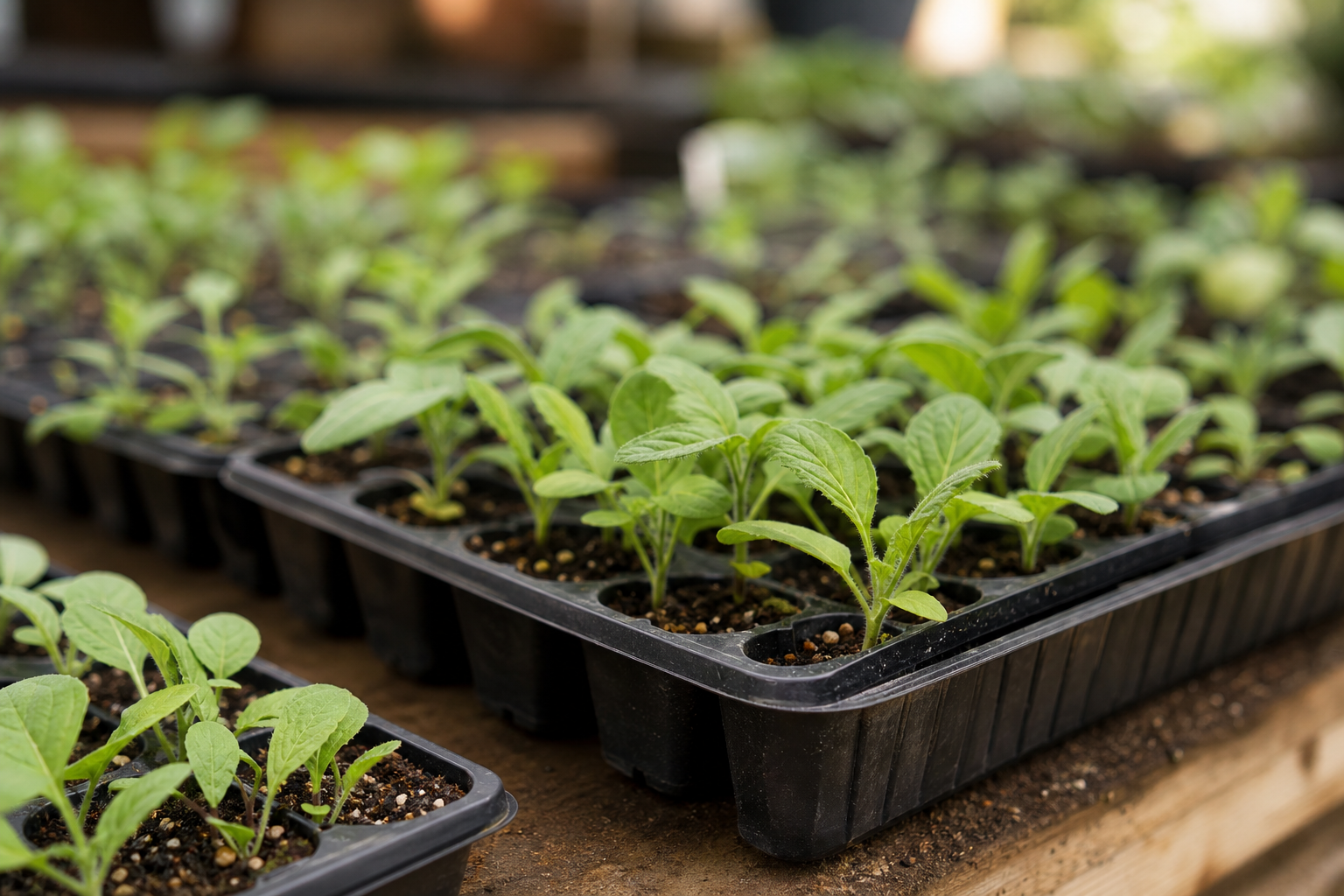
Seedlings occupy a useful middle ground between seeds and established plants, and for most home gardeners they represent the best balance of cost and reliability.
By the time a seedling reaches the garden centre, the most vulnerable phase – germination itself – has already been managed under controlled conditions. You’re buying a plant with an established root system, past the point where a single dry day or a passing bird can end its chances. For vegetables, annuals, and most flowering plants, seedlings are more reliable than direct sowing and meaningfully cheaper than larger nursery stock.
The one situation where seedlings don’t work is for plants that dislike transplanting. Carrots, parsnips, beetroot sown for long straight roots, and most poppy species need to go directly into the ground where they’ll grow. Starting them in a tray and moving them won’t give you the result you’re after.
Seeds vs Established Plants: A Quick Reference
| Situation | Best approach |
|---|---|
| Vegetables and annual flowers | Direct seed or seedlings |
| Kikuyu lawn, large area, no deadline | Seed – Kikuyu |
| Kikuyu lawn, immediate result | Instant turf rolls |
| LM Berea or Buffalo grass | Turf rolls or plugs only |
| Winter lawn colour (Kikuyu) | Annual ryegrass overseed – with caution |
| Bare or thin patches in summer | Overseed September-November |
| Trees, any project scale | Established nursery stock |
| Fynbos, small garden | Established plants from specialist nursery |
| Fynbos, large restoration site | Seed with smoke water treatment |
| Commercial or estate project | Established plants |
| Budget limited, timeline flexible | Seedlings as the best compromise |
| Exotic species not available locally | Ask a nursery why before importing |
Frequently Asked Questions
Are seeds cheaper than established plants?
Seeds cost less to buy, but growing from seed rarely works out cheaper overall. Factor in the water, time, soil preparation, failed germination, repeat sowings, and the weeds that colonise bare soil while you wait, and the cost difference shrinks considerably. For most landscaping projects, established plants or seedlings deliver better value.
Can I grow LM Berea or Buffalo grass from seed?
Not reliably. These varieties are almost exclusively available as turf rolls or plugs. Products sold as “Buffalo grass seed” are typically generic blends that won’t produce a true Buffalo or LM lawn. Buy rolls or plugs for these varieties.
What is the best time to overseed a Kikuyu lawn in Cape Town?
For filling bare or thin patches, September to November – when soil temperature is above 15°C and Kikuyu is actively growing. For winter colour, annual ryegrass can be broadcast in March or April, but be aware that it can compete with Kikuyu in spring. Annual ryegrass is safer than perennial ryegrass or tall fescue for this purpose.
How do I know if my seeds are still viable?
Try the float test for larger seeds – place them in water for fifteen minutes and plant the ones that sink. For smaller seeds, use the paper towel test: ten seeds on a damp paper towel in a sealed bag, left in a warm spot for seven to fourteen days. A germination rate of 70% or higher means the seeds are worth using.
Is it legal to import seeds from overseas into South Africa?
An import permit from DALRRD is required. Bringing seeds in personal luggage without declaring them is illegal and risks introducing pests and diseases with serious consequences. If a plant isn’t available locally, ask a specialist nursery why before trying to source it internationally.
What is smoke water and why do fynbos seeds need it?
Smoke water replicates the fire trigger that many Cape fynbos species evolved to respond to before germinating. Without it, proteas, ericas, restios, and other fynbos species often show very poor germination even from healthy, correctly stored seed. It’s available from Kirstenbosch and specialist fynbos nurseries.
When should I use seedlings instead of seeds?
For most plants except those that dislike transplanting – carrots, parsnips, and taprooted species need to be direct-sown. For everything else, seedlings reduce the risk of the most vulnerable germination phase and typically establish faster and more reliably than direct sowing.
Ready to Plan Your Project?
Whether you’re establishing a new lawn, restoring a large site, or trying to figure out the right approach for a commercial landscape, the seeds versus established plants decision sits at the centre of every project budget. If you’d like professional input on what will work for your specific site, contact the Contours team, and we’ll help you work it out.
This is part of our Landscaping Mastery Series. The next instalment covers Fruit and Nut Trees in Your Landscape.